
Fidelity put an entire Boston office building up for grabs ahead of plans to relocate its headquarters elsewhere in the city. But thanks to an attendance policy that will soon require employees to show up all five days of the week, the company has decided to keep it for itself.
The Boston-based financial services conglomerate told its workers this week that they would be returning to the office full-time in September, right alongside the anticipated completion of its new headquarters in the city's Seaport District. The escalated mandate will impact a majority of the firm's employees, which are spread across Massachusetts, New Hampshire, Kentucky and New Mexico.
The move comes as some of the country's largest landlords have been saying that stricter in-office mandates are enough to bolster optimism that demand for space will climb as corporate heavyweights push to revert to their pre-pandemic workweek schedules. The demand for office space has been building since the start of the year, as corporate heavy hitters such as Amazon, Starbucks, Target, Dell and Salesforce push for more stringent in-person requirements.
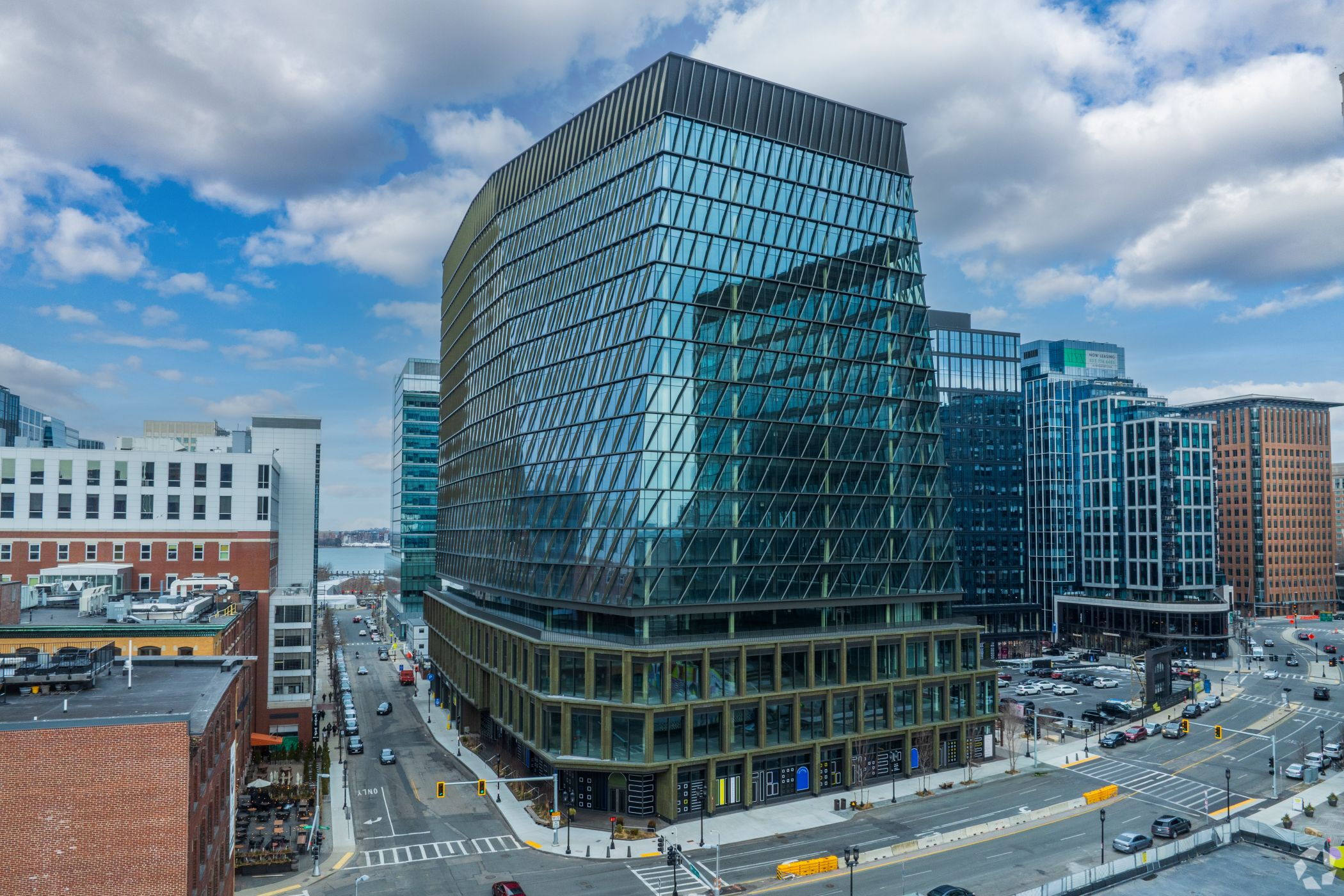
Fidelity, in order to accommodate the return, has walked back plans to lease out the entirety of its current headquarters at 245 Summer St. Fidelity owns the more than 800,000-square-foot property and had initially listed it for lease last year as it prepared to relocate to the 200 Seaport Blvd. project, now known as Commonwealth Pier.
While the relocation was expected to shrink the firm's footprint down to the Seaport development's roughly 650,000-square-foot expanse, Fidelity's new attendance policy now means it will occupy space across both properties, delivering a significant shot in the arm to Boston's recovering office market.
The company's return-to-office mandate is meant to increase in-person "connections, mentorship and learning," a Fidelity spokesperson told CoStar News, all of which are "central to our long-term success."
Employees have been operating on a policy Fidelity adopted in response to the pandemic that called for about half of their time to be spent in physical office space. The new policy means the company is now "exploring options" to add space and capacity to all of its offices. The company employees about 80,000 people around the world, the majority of whom are based across the United States.
Once its new Seaport Boulevard hub debuts in September, Fidelity's Boston footprint will span almost 1.5 million square feet.
Push for in-person work
Fidelity's new attendance policy aligns with other corporate America heavyweights that view remote or hybrid work as an impediment to growth and innovation.
Companies nationwide are demanding more in-person time from employees, either by revoking those flexible work privileges, increasing the number of days they're required to be in an office or asking a portion of the workforce to relocate closer to a corporate hub.
Some of the country's largest landlords have said that stricter in-office mandates are enough to bolster optimism that demand for space will climb as corporate heavyweights push to revert to their pre-pandemic workweek schedules.
The number of CEOs who believed their companies would adopt a full return to a five-day workweek climbed to about 85% from the 64% reported in 2023, according to a KPMG survey.
Hybrid mandates have plummeted from about 80% to roughly 40% over the same period, and only 1% of companies continue to allow fully remote policies, according to a JLL survey.

Material demand
Revised mandates, such as Fidelity's, also underscore the power that companies are leveraging as the national job market weakens and employers no longer face the steep competition for talent displayed in the earlier years of the pandemic. Employers across the financial services and banking industries have been especially strict in enforcing their attendance policies, many of which require employees to show up Monday through Friday.
While it took some time to materialize into a demand for physical space, those firm attendance policies are finally delivering a quantifiable boost to markets such as Boston.
JPMorgan Chase, for example, earlier this year finalized a deal to anchor the city's South Station Tower as part of a roughly 251,160-square-foot commitment that will soon accommodate the bank's own five-day mandate.
Other heavyweight tenants including Amazon, Reed Smith and KKR have also contributed to the city's recent leasing streak, collectively signing more than 3.6 million square feet of deals over the past year, CoStar data shows, the highest mark since 2019.
Fidelity has a long track record with its namesake Summer Street building, which was officially designated as the company's headquarters in 2012. The firm has occupied its entirety throughout a handful of ownership periods over the past couple of decades, most recently with its affiliate's nearly $730 million purchase of the property in April 2020.